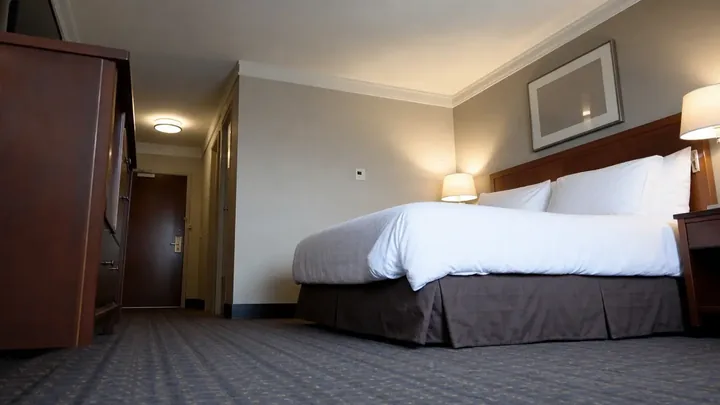
Of all the hazards a guest room can hold, furniture tip-over is the one with the least excuse attached. The mechanism is fully understood: a tall piece, an unanchored mounting, a climbing child or a pulling adult, and gravity finishing the sequence. The fix is fully commodified. Anchor hardware costs less than the towels in the room. The public guidance is unambiguous: the U.S. Consumer Product Safety Commission’s Anchor It! campaign exists because tip-overs injure and kill, disproportionately children, in exactly the furniture categories guest rooms are full of: dressers, wardrobes, chests, and the televisions on top of them. And yet unanchored tall furniture remains one of the most common findings on any honest room walk. The gap between the knowledge and the rooms has a specific cause: properties treat anchoring as an installation event , something the renovation did, when tip-over safety only exists as a program: inventoried, verified by hand, and re-verified forever. This document is that program.

Why hotels are the hard case
The home-furnishing version of this problem is solved once per household. The hotel version has three aggravations. The occupants are strangers to the room: guests, including small children at unsupervised moments, interact with unfamiliar furniture in unfamiliar layouts, and drawers get used as steps everywhere that drawers exist. The furniture works harder: hotel casegoods take years of duty per year, and anchoring hardware loosens on the same schedule as everything else that is never re-checked. And the building fights back. Anchors installed into drywall alone, missed studs, and demising walls of block or concrete where the installer improvised are endemic in exactly the buildings hotels are. The consequence is doctrinal: in a hotel, an anchor that was installed is not a fact about the present. Only an anchor that held this year’s pull is.
The inventory
The program starts with a list. An unlisted obligation is an unmet one: every room type walked once, every piece that is tall, top-heavy, climbable, or surmounted by a television entered on the anchoring inventory: dressers and chests, wardrobes, bookcases and étagères, closet systems and shelving, TVs (mounted, or strapped where freestanding), mirrors and headboards riding on cleats, and anything in a suite’s living space that matches the profile. Each line carries the piece, its anchoring method, and its verification cadence. The inventory is also where the design conversation lives: at acceptance, anchoring is a punch-list line per piece (installed per the manufacturer’s hardware and instructions, into structure, not into gypsum and optimism) and the piece is not accepted until it holds.

Inspection without improvising a load test
Do not invent a hard pull or load test: an uncontrolled test can damage a wall, fitting, or piece and is not a substitute for installation instructions. Inspect visually for missing, loose, damaged, disconnected, or altered hardware; verify attachment only by the method and cadence specified by the manufacturer, anchor supplier, qualified installer, or safety professional. Any observed movement or failed specified check is an act-now finding under the two-bucket triage. Also require event-triggered re-verification after furniture is moved, walls are opened, hardware is replaced, or a screen or mount changes. Close the event with documented reinstallation and the specified verification.
Write the re-anchoring rule into every furniture-moving workflow explicitly: “any inventoried piece moved is reinstalled and verified according to its instructions before the room sells.” The alternative doctrine, furniture that is never moved, does not exist in a building with carpet, floods, and renovations. The unanchored dresser found in year three was almost never installed wrong; it was moved right, once, by someone doing their job.
The hardware is the cheap part
Doctrine on the components, briefly. Anchor per the manufacturer’s supplied or specified hardware where it exists. Contract-grade product ships with anchoring provisions for this duty. Use the hardware, fastener type, attachment point, and substrate specified by the manufacturer or a qualified installer; do not substitute an unverified generic fastener. Televisions follow their manufacturer and mount instructions, including compatibility with the current screen and any specified inspection. None of this is exotic; all of it appears in the installation instructions that were discarded with the packaging. The program’s entire hardware budget is trivial against a single incident , which is also precisely how the incident file will frame it if the program didn’t exist.
The paper trail
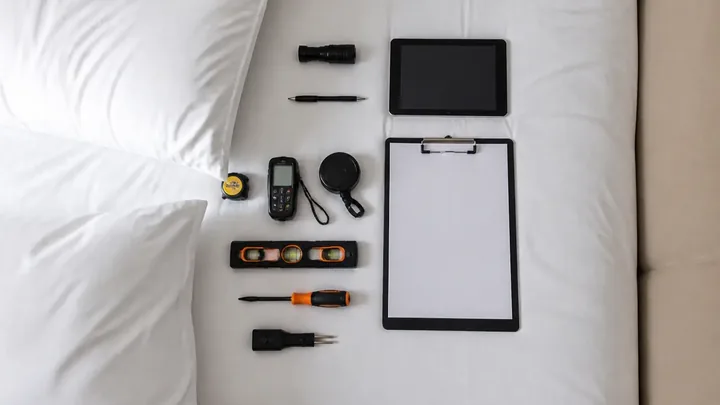
The program’s last component is its record. Here the record is unusually load-bearing, because tip-over is a hazard whose aftermath asks legal questions in a way worn carpet never will. The working set is three documents, none longer than a page per floor. The inventory itself, versioned: pieces added at acceptance, removed at disposal, so the list always describes the building as it stands. The verification log: date, room, piece, specified inspection result, initials: one line per check, kept boring on purpose, because a log of routine passes is precisely what demonstrates a routine. And the corrective trail: every failed specified inspection paired with its work order and its re-test, closing the loop in writing. Together they answer, in documents dated before anyone asked, the only questions that matter afterward: did the property know which pieces needed anchoring, did it check them, and did it fix what checking found. Keep the set with the property’s permanent records alongside the incident file’s other pre-incident paper, and let its existence discipline the present: a specified check someone must initial is more likely to be completed, which is the quiet way the paperwork keeps the furniture on the walls.
One clarification keeps the program honest at its edges: the doctrine covers items identified by the risk assessment and applicable instructions, not an unsupported rule that every wall-hung object receives the same test. Include casegoods, televisions, mirrors, art, lamps, shelving, and elevated objects where their construction, location, or instructions create a falling-object risk, using an appropriate documented inspection method. The question the inventory asks of every object in the room is the same one: if this let go, what is under it? Where the answer is a bed, a chair, or a walking line, the object is on the list.
Why this is a program and not a finding
The distinction in the title is the whole doctrine. A property that treats tip-over as a finding fixes loose anchors as the walk discovers them: reactive, roomwise, and always behind the events that loosen them. A property that treats it as a program owns an inventory, a standard, a cadence, and event triggers, and can demonstrate all four on paper, which matters twice: once because the demonstration is what keeps the rooms actually safe, and once because, in the aftermath this hazard occasionally supplies, the difference between “we fix what we find” and “here is our anchoring program, its inventory, and its verification log” is useful evidence of what was inspected and corrected; it does not by itself determine negligence or legal compliance. Anchor the furniture according to its instructions. Then keep anchoring it, on paper, forever. There is no version of this hazard worth any other doctrine.