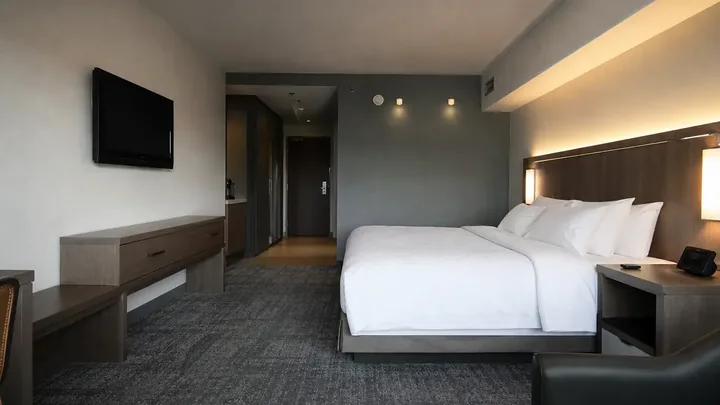
Every finding on a room walk lands in one of two buckets, and the entire value of inspecting rooms depends on sorting them correctly. Worn is a budget problem: it goes on the ledger, accumulates into a capital case, and waits its turn. Unsafe is today's problem: it becomes a work order before you leave the floor, and if it can't be fixed today, the room comes out of service. The two buckets have different clocks, different owners, and different consequences for getting them wrong. A recurring operational risk is letting items drift from the second bucket into the first because they have been visible for so long that they feel like wear; properties should measure this in their own work-order and incident data rather than assume a universal industry rate.
A scarred desk edge is worn. A desk that rocks under a laptop is on its way to unsafe. A faded grab bar is worn. A grab bar with observed movement or a failed approved inspection is unsafe today, no matter how good the chrome looks. The distinction is never about appearance. It is about what happens when a guest loads the item with their body weight, their child, or their trust.
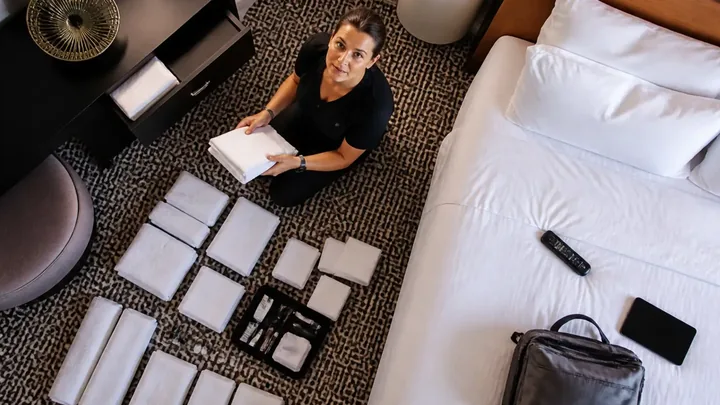
The sorting question
The test that sorts nearly every finding: does the failure mode injure someone, or does it merely disappoint them? Disappointment is the capital plan's business. Injury is today's business. When a finding could go either way, it goes in the unsafe bucket: the cost of being wrong in that direction is a work order you didn't strictly need; the cost of being wrong in the other direction is an incident report, and possibly a much worse document than that.
Below are the categories where the drift from "worn" to "unsafe" most often goes unnoticed, and what the hands-on check is for each.
Tip-over: the furniture that moves when pushed
Tall casegoods (dressers, wardrobes, TV consoles) are a well-documented tip-over hazard, and lodging rooms may be occupied by children in an unfamiliar environment. The U.S. Consumer Product Safety Commission runs an ongoing national campaign on furniture and TV tip-over, its Anchor It! program is the reference point, and its guidance is useful when the products and installation conditions are applicable. Commercial lodging requirements and product instructions may add or differ.
Do not improvise a pull test. Inspect for missing, loose, disconnected, damaged, or altered anchoring and verify it only by the method in the manufacturer or installer instructions. Observed movement or a failed specified check is a today finding. For televisions, follow the screen, mount, anchor, fastener, and wall-substrate instructions; visual inspection cannot prove a screw found adequate structure.
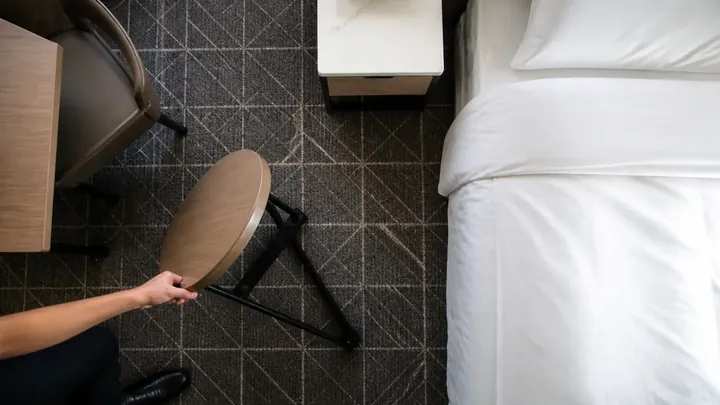
Electrical: the room's quietest escalation
Electrical findings may look minor even when they warrant prompt attention. Authorized staff may perform only the functional checks allowed by the property’s electrical-safety procedure; otherwise, visually inspect and report. Do not insert an improvised device into a receptacle. Today-bucket findings include outlets reported not to grip a plug, any scorch mark or heat discoloration at a plug face, cords pinched under bed frames or furniture feet, damaged cord jackets, and daisy-chained power strips left behind by prior fixes. Lamp sockets that flicker when the shade is touched are a finding, not a quirk. None of this is a capital conversation; all of it is an engineering ticket with today's date.
Water and glass: the two fast movers
Most wear moves slowly. Two categories move fast, and both live in or near the bathroom:
- Water finding a path: the failed caulk line, the soft spot in the vanity kick, the ceiling stain below a guest bath. If the source continues, damage may grow. Slow drains can leave standing water; corrosion, leak evidence, and damaged supply components warrant prompt diagnosis. Water findings get a same-day triage, with urgency based on the observed condition.
- Glass and mirrors: a chipped tub-surround corner, a cracked shower door, a mirror with a compromised edge or failing clips. Tempered glass fails suddenly and completely, and a shower door that has already been chipped at an edge is a different object than it was when installed. Cracked or edge-damaged glass in a wet, barefoot, naked-human environment is as clean an example of "unsafe regardless of appearance" as the industry offers.
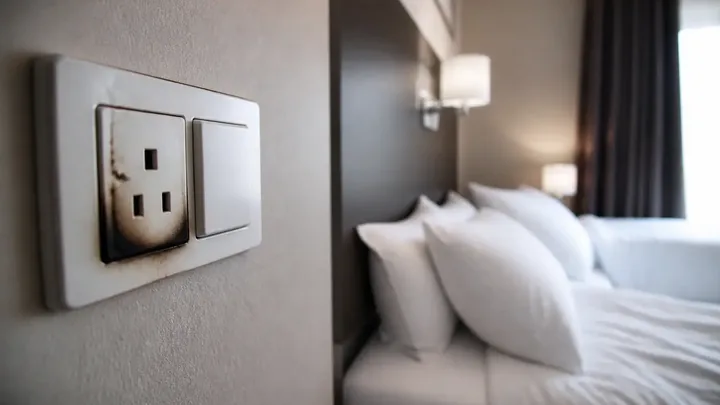
Grab bars, and everything guests use as one
Inspect grab bars by the approved property method and applicable manufacturer or professional guidance; do not substitute an uncontrolled full-force pull. A bar with observed movement or a failed specified check is out of service today, and so is the room if the bar is required to make that bathroom usable. Towel bars, shower-door handles, and vanity edges may be grabbed by a wet or unsteady guest, but they are not grab bars unless designed and installed for that purpose. Loose, damaged, or poorly located hardware deserves a work order.
In accessible rooms, this category carries an additional, non-negotiable layer: the room's accessibility features are legal obligations under the Americans with Disabilities Act, not amenities. The Department of Justice's ADA standards and the U.S. Access Board publish the standards and technical guidance. An inspection program that treats accessible-room hardware, clearances, and roll-in shower equipment as ordinary FF&E, deferable when worn, is mis-filing a compliance obligation as a preference.
Worth stating once and remembering: the moment a finding involves an employee rather than a guest (the broken bed frame housekeeping lifts anyway, the failing outlet an attendant's vacuum uses), it also becomes a workplace-safety matter. The employer's general duty to provide a workplace free of recognized hazards is federal law; OSHA is the reference. The same finding can be a guest liability and an employee hazard simultaneously, and the second framing often moves budgets that the first could not.
Running the two buckets
Operationally, the split works only if the two streams are handled by genuinely different machinery:
- The unsafe stream is verbal-plus-written, same day. Radio or flag the room before finishing the floor, then paper it. A safety finding that waits for the weekly meeting was not treated as a safety finding.
- Out-of-service is a tool, not a defeat. The willingness to pull a room for a wobbling wardrobe or a shifting grab bar is what makes the whole program credible. A property that will never sacrifice a sellable night will eventually sacrifice something worse.
- The worn stream is patient and cumulative. It feeds the condition audit and the capital case. Its power is in volume and documentation, not urgency.
- Re-sort on every walk. Items age across the boundary. The worn drawer glide of last quarter is this quarter's drawer that falls out when pulled. The fixed-path walk exists partly so that boundary crossings get caught instead of grandfathered.
The deepest habit to build is linguistic. Never let anyone on the property say "it's always been like that" as a closing statement. As an observation, it's useful history. As a verdict, it is the exact sentence by which unsafe findings acquire seniority and become furniture. The building does not grandfather hazards. Only people do that.