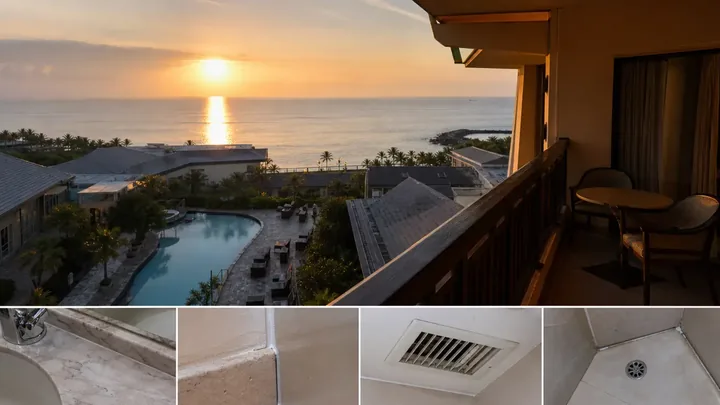
The bathroom concentrates water, hard surfaces, electrical equipment, and accessibility features in a small space. It can therefore carry meaningful hygiene, maintenance, and safety risk, but no universal dataset establishes that it is every property’s most expensive zone or the site of most in-room injuries. The zone standard below is ordered by the logic that governs it: follow the water. Where water is supplied, where it falls, where it drains, where it escapes as vapor, and where it is not supposed to be.
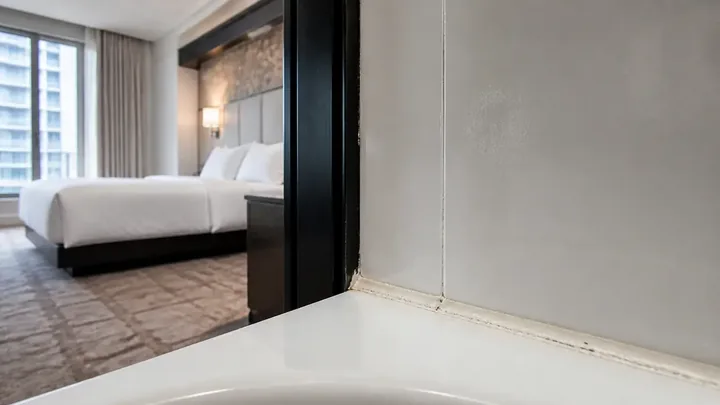
The caulk doctrine
Caulk and grout are visible parts of a wet-area assembly, not substitutes for the waterproofing, backing, flashing, and drainage design behind them. A failed sealant joint requires diagnosis. A gap, crack, loss of adhesion, or soft section may permit water entry or signal movement, but visual appearance or discoloration alone does not prove concealed damage or microbial growth. The walk’s check is the flashlight held flat along every line (wall joints, corner verticals, the tub or pan perimeter, the floor line behind the toilet) and a fingertip press where age is suspected: sound caulk is firm and bonded, dead caulk dents or peels. Any breach is a today finding for diagnosis and appropriate repair, because continued water entry can make the underlying work larger. The companion check is the evidence of possible water entry: soft spots underfoot at the tub line, staining on the ceiling below (ask engineering, they know), lifted flooring at the wet edge.
Ventilation: screening and measurement
Persistent moisture can involve ventilation, water entry, temperature, occupancy, cleaning, or multiple causes. A tissue check can screen for apparent draw, but it does not measure airflow or prove code performance. The field screen uses a tissue: run the fan and hold a sheet to the grille. If it does not hold, escalate for inspection; a qualified technician can measure airflow and diagnose causes such as a grille matted with lint (a housekeeping-calendar item that belongs in the deep-service scope), a dead or dying motor, or a duct problem beyond the room. Log fan failures by mode: a floor of matted grilles is one instruction to housekeeping; a floor of dead motors is a component cohort at end of life on one clock.
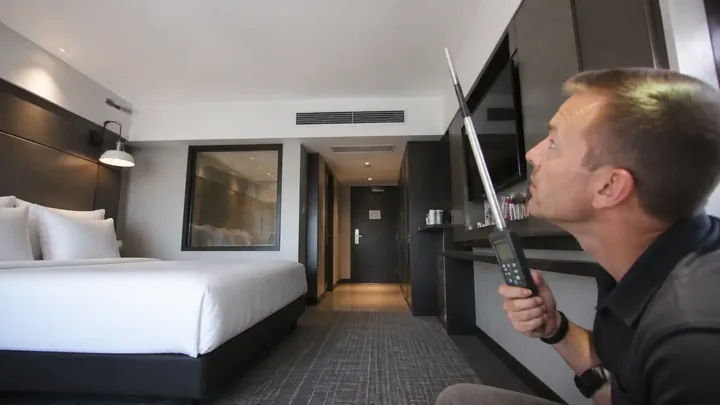
Water delivery and drains
Test water delivery under a property procedure that prevents scalding and follows local requirements; do not run fixtures to uncontrolled full hot. Record time to usable temperature and measure outlet temperature with an appropriate instrument where required. A stack whose time to usable temperature has lengthened may indicate a system issue. Check pressure according to the approved procedure and unchanged by flushing the toilet (the pressure-drop scald pattern is a two-a.m. complaint and a genuine safety line where mixing valves have drifted), and the escutcheons and trim tight to the wall. A loose trim plate is a small water entry point aimed at the one cavity nobody can inspect. Fixtures themselves: aerators clean and flowing evenly, handles firm with no dead travel, the diverter sending water where it claims, the showerhead free of the mineral spray-pattern that reads as neglect at eye height and costs minutes to fix.
Drains are observed under the approved water-use procedure: run both drains with water flowing and watch the water leave. Standing water in a tub during a shower is a daily guest experience of “dirty,” whatever its actual cause; slow sinks photograph as hair, and usually are. Flush and hold the toilet handle: run-on after release is the quietest water bill in the building and, at night, an audible one room-wide. Pull the stopper mechanisms through their travel; check under the sink with the flashlight, because the vanity cabinet floor keeps a perfect archive of every slow leak the trap has ever had: swelling, tide marks, and the property’s entire supply-line history in one uncleaned corner.
Surfaces, glass, and grab points
Surface grading follows the same layered logic as everywhere, soil versus wear versus failure, with the zone’s own emphases. Floors: graded from the doorway with the light held flat (residue films show as a halo), then at the wet edge for lifted or cracked units; anything underfoot that moves, rocks, or presents an edge is a slip-line finding, act now. Vanity tops: chips and standing-stain rings to the ledger; a cracked top is a hygiene-perception failure regardless of function. Walls and ceiling: paint state above the shower is a ventilation gauge as much as a finish item. Glass is graded structurally before cosmetically: shower door edges and corners for chips (tempered glass fails from edge damage, and it can fail suddenly), hinges and the door’s handle inspected for looseness and operated normally, mirrors checked at the edges and for black-edge desilvering. Inspect grab bars using the approved method and applicable manufacturer or professional guidance; do not substitute an uncontrolled full-force pull. A bar with observed movement is act-now and, where the bar is required accessibility equipment, a room-out-of-service conversation, then towel bars, hooks, and the shower-door handle, all of which guests treat as grab bars the moment a floor is wet, whatever the design intent was.
Grade every bathroom finding twice: once as maintenance, once as perceived hygiene. A mineral-crusted showerhead, a hairline vanity crack, one failed grout line at eye level: mechanically trivial, but they are read by guests as “this room is not clean,” and that reading contaminates the scoring of everything else, including the parts that are spotless. The perceived-hygiene column explains why bathroom small-works punch above their cost anywhere a review score matters, which is everywhere.
The zone’s small hardware deserves one sweep of its own before the ledger read: amenity dispensers visually checked and operated normally, toilet-paper and tissue holders inspected for observed looseness, robe hooks checked under the approved method, and the vanity’s stool or bench, where one exists, checked as seating. These are hand-height components in a wet area; document defects and route repairs instead of improvising load tests.

The zone at ledger level
The bathroom’s capital story is binary in a way no other zone’s is. Its components either ride maintenance more or less indefinitely (fixtures, fans, glass, regrouting) or they trigger construction (waterproofing, pan replacement, tile substrate, repiping). There is no furniture-style middle. That makes the ledger’s job here specific: separate the findings that feed the maintenance program from the early signals of the construction tier (recurring pan-line failures in a stack, soft floors, between-pane fog in the same rooms twice) because those signals are what decide whether the next renovation is a rooms project or a rooms-and-risers project, a distinction that moves the budget by multiples and the audit is the only document positioned to see coming. Follow the water, count what it has been doing, the waterline checklist (GRS-C-05) walks the full sequence printably, and the zone stops ambushing people. It never stops being the expensive room; it stops being the surprising one.