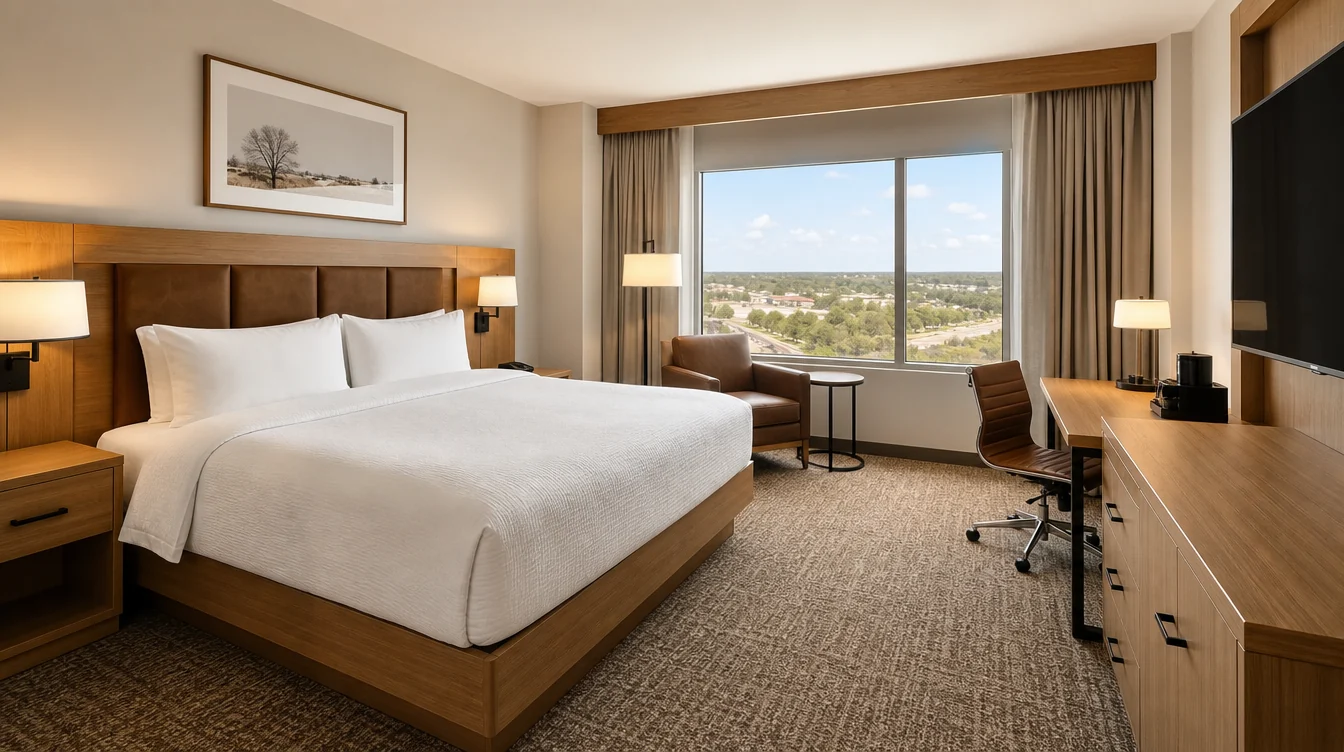
THE COMPLETE ROOM
Make the repeat room package explicit.
List headboards, bed bases, nightstands, desks, dressers, wardrobes and seating as separate lines, with a quantity per room and the room count they apply to. Distinguish a standard king from a corner king or suite; the same bed size does not prove that the casegoods package is identical.
Keep the package easy to review. Put the room name, furniture dimensions, finish reference and quantity on the same schedule. Mark unresolved selections clearly so a provisional choice does not become an assumed approval.
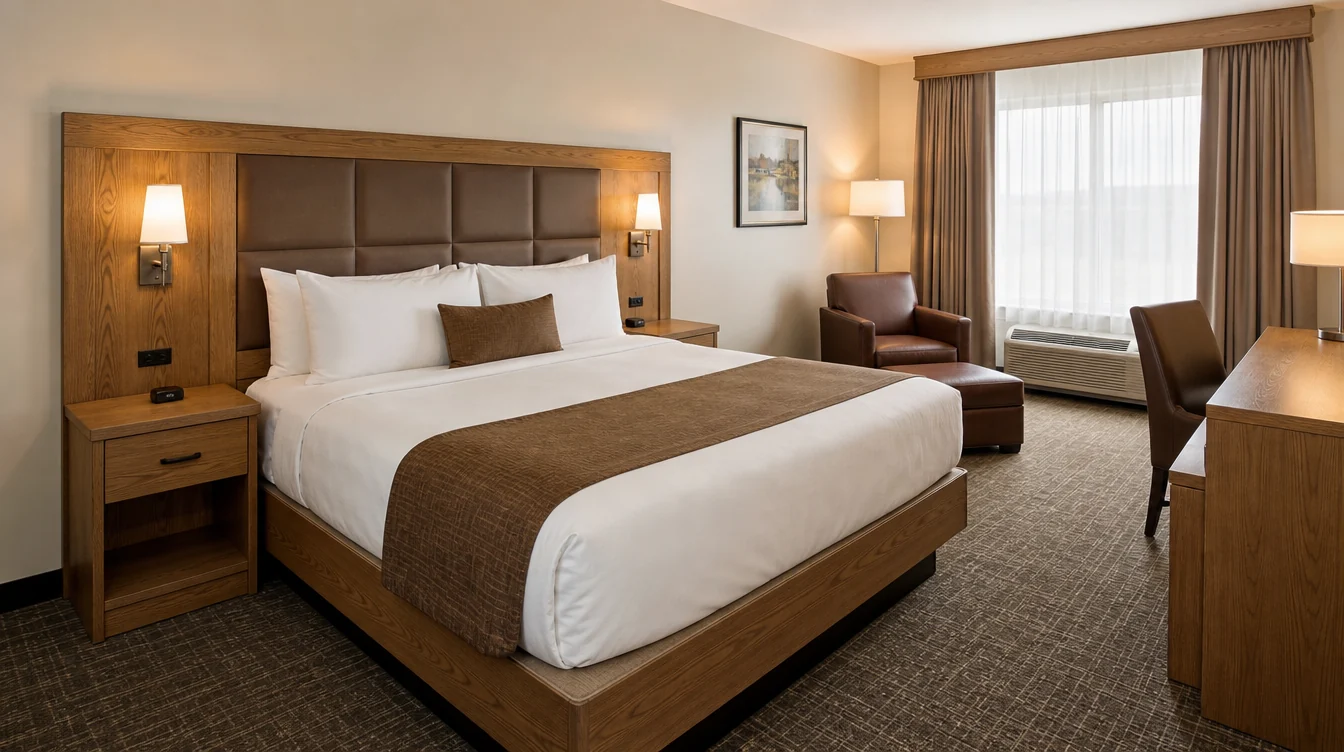
Start with the headboard and bedside package.
Confirm the mattress and bed-base dimensions before setting headboard width and nightstand positions. Record the finished bedside height, usable top surface, drawer access and any power or lighting relationships. Decide which pieces are freestanding and which require mounting.
Keep furniture selection and installation responsibility on separate lines of the brief. Ask the project team to review wall preparation, fixing methods and any electrical coordination before the final furniture release. The headboard and nightstand worksheet helps gather those decisions.
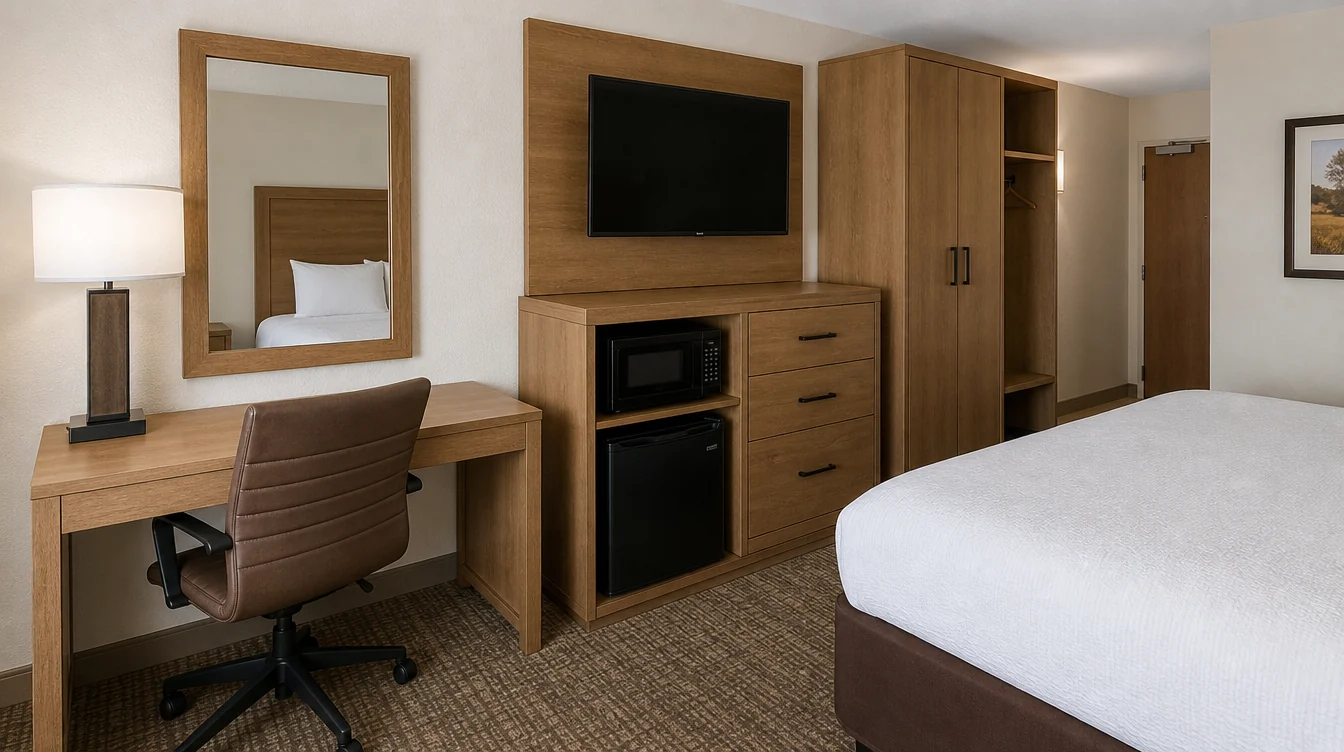
Give every storage and seating piece a purpose.
A wardrobe handles hanging storage; a dresser handles folded items; a luggage bench keeps bags off the bed and desk. List the functions needed in each room before selecting separate units or a combined casegood. Include the desk chair in the measured desk footprint, with room to pull it back.
For lounge chairs, sofas and occasional tables, record the overall dimensions and upholstery reference rather than relying on a room photograph alone. Confirm finish-care instructions, hardware details and how a damaged component can be identified for replacement.
- Identify receiving hours, unloading equipment and the route from delivery point to the farthest guest room.
- Record separate finish and upholstery approvals for any branded or independently designed room packages.
- Confirm which costs cover packaging, delivery, assembly, placement and removal rather than comparing furniture totals alone.
BEFORE THE FULL RELEASE
Approve a room that can be repeated.
Use the first complete room to verify the furniture schedule against the actual space. Sit at the desk, open the wardrobe and dresser together where their paths meet, and check whether housekeeping can reach around the bed base and behind movable seating.
Attach the signed room schedule, measured layout, finish and fabric references, agreed changes and dated photographs. Identify who can approve substitutions. Keep a separate exception list for rooms that differ from the sample.
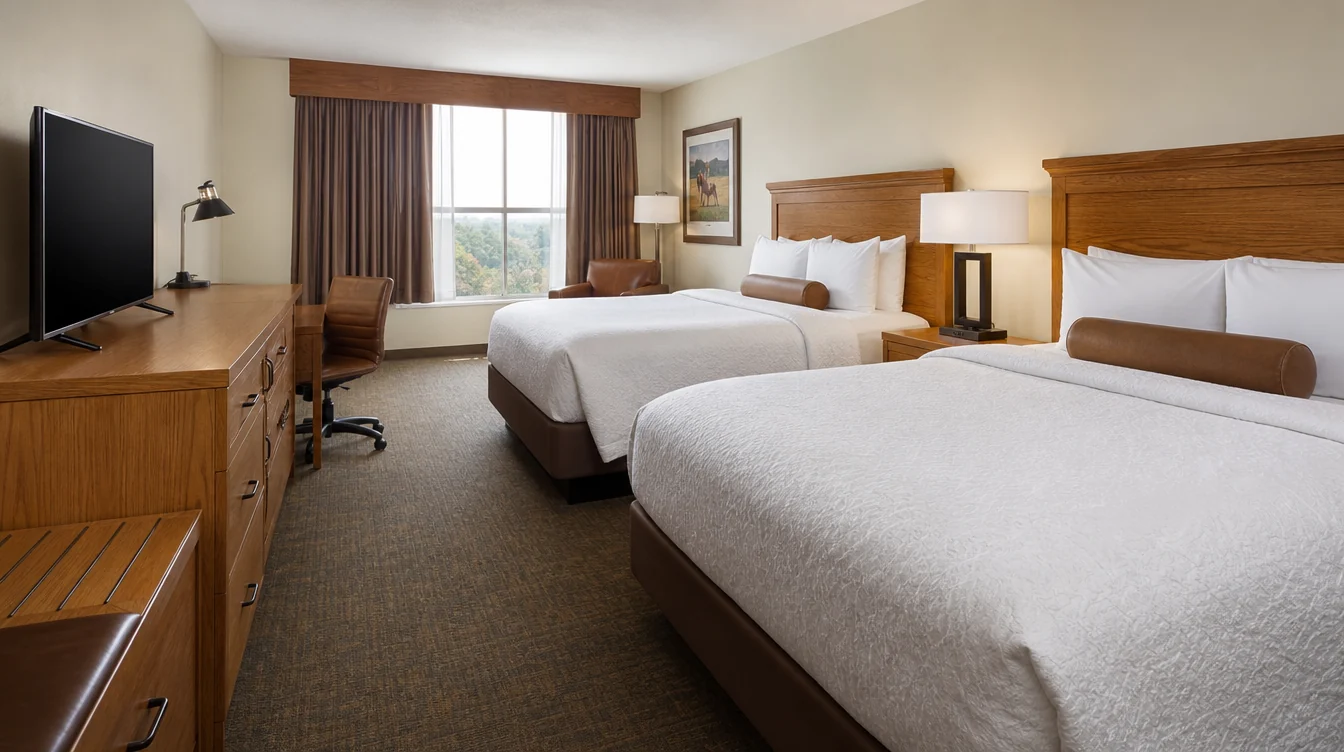
Plan deliveries around complete, usable rooms.
Create install-ready batches by floor or wing, including all the pieces needed to return those rooms to service. Agree how short shipments, damaged items and replacement parts will be handled before committing the next room block. Keep the first batch small enough to reveal packaging or fit problems.
Compare quotations using the same scope: furniture, packaging, shipping, unloading, assembly, placement and removal of old pieces. Record what is included, who handles each step and how missing or damaged items affect a room's release. Use the phased furniture replacement guide to organize the room batches.
YOUR TEXAS PROJECT
Turn the room plan into a furniture brief.
Send your room count, location and the categories you want to discuss. A clear early brief can start with approximate quantities; confirmed dimensions and selections can be added as the project develops.
| Decision | Record for each room type |
|---|---|
| Room mix | Room name, confirmed count and any layout exceptions |
| Furniture | Item, quantity per room, dimensions and retained pieces |
| Finish & upholstery | Reference, approval status and permitted alternatives |
| Delivery & installation | Property address, access constraints, receiving and placement scope |
| Release plan | Sample-room approval, room batches and target timing |
Hotel furniture questions.
What belongs in a Texas hotel furniture inquiry?
Include the property location, room types, number of rooms, furniture categories and target installation window. For a Texas project, note any room-size variations and delivery-route constraints. Add confirmed dimensions or an existing furniture schedule when available.
Can the project cover selected pieces instead of a whole room?
Yes. Define which furniture stays and which pieces need replacement. Headboards and nightstands, desks and chairs, or storage pieces can form a focused scope. Review the new and retained furniture together before approving the package.
How should room-package quantities be calculated?
List the quantity of each item per room type, multiply by the confirmed room count for that type and record any approved spares separately. Count king, double-queen and suite packages independently. The project team should confirm the final schedule before ordering.
When should delivery and installation dates be confirmed?
Confirm the furniture specification, quantities, approval milestones and delivery scope first. Ask for a written production and shipping schedule for the actual package, and coordinate it with receiving access, installation responsibility and the rooms the hotel can release.