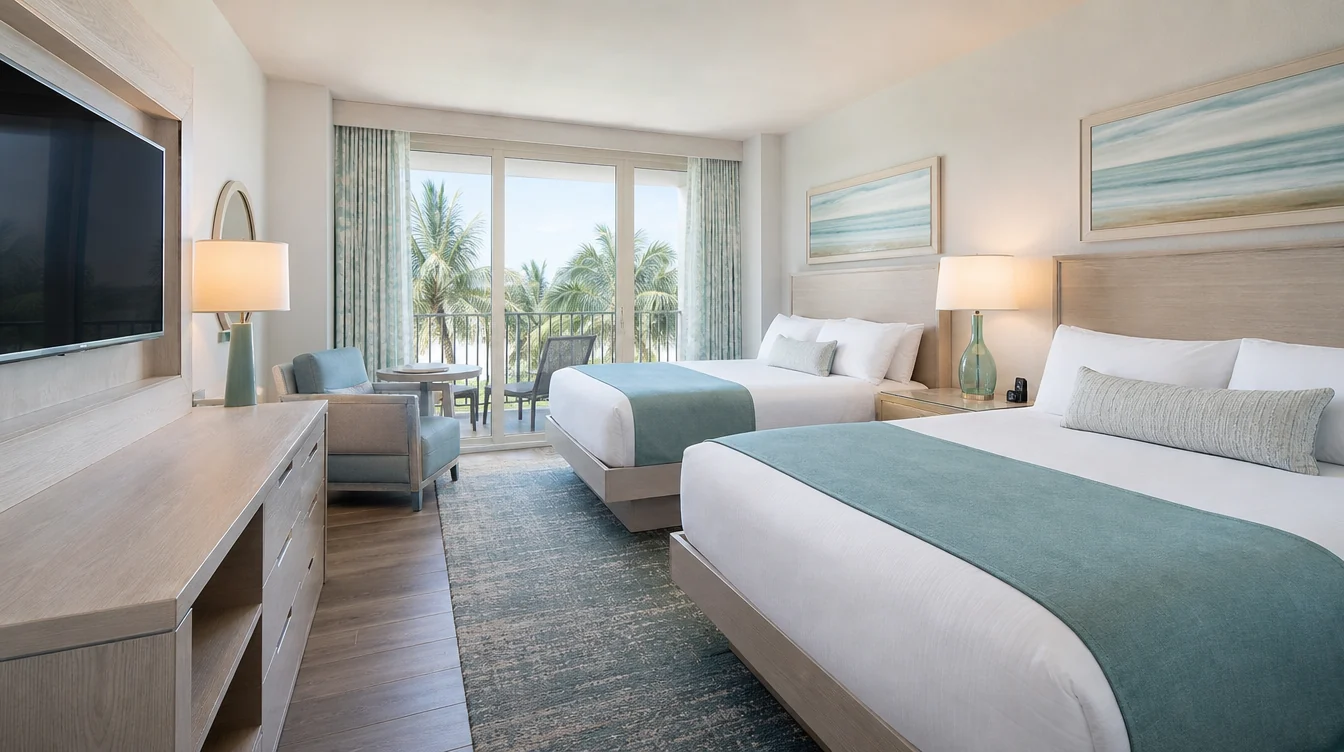
THE COMPLETE ROOM
Give luggage and everyday belongings their own surfaces.
Coordinate the headboard and bed base with a dresser, luggage bench and nightstands that remain usable after guests unpack. In larger rooms, separate lounge seating from the desk chair so the work zone stays available. In a double-queen room, review shared bedside storage against the actual bed spacing.
Keep the package easy to review. Put the room name, furniture dimensions, finish reference and quantity on the same schedule. Mark unresolved selections clearly so a provisional choice does not become an assumed approval.

Start with the headboard and bedside package.
Confirm the mattress and bed-base dimensions before setting headboard width and nightstand positions. Record the finished bedside height, usable top surface, drawer access and any power or lighting relationships. Decide which pieces are freestanding and which require mounting.
Keep furniture selection and installation responsibility on separate lines of the brief. Ask the project team to review wall preparation, fixing methods and any electrical coordination before the final furniture release. The headboard and nightstand worksheet helps gather those decisions.
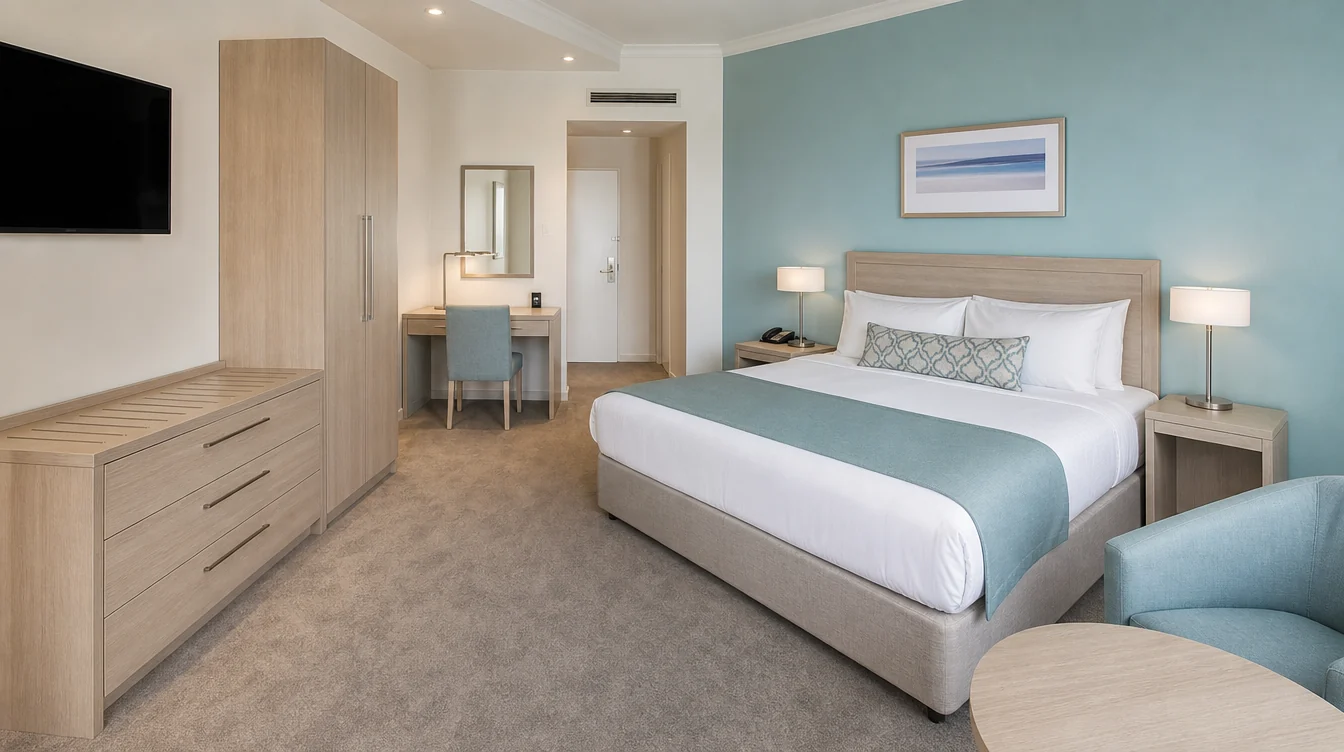
Give every storage and seating piece a purpose.
A wardrobe handles hanging storage; a dresser handles folded items; a luggage bench keeps bags off the bed and desk. List the functions needed in each room before selecting separate units or a combined casegood. Include the desk chair in the measured desk footprint, with room to pull it back.
For lounge chairs, sofas and occasional tables, record the overall dimensions and upholstery reference rather than relying on a room photograph alone. Confirm finish-care instructions, hardware details and how a damaged component can be identified for replacement.
- Document room-specific moisture or coastal exposure conditions for the supplier instead of assuming one finish suits every location.
- Count lounge seats and work chairs separately, especially in suites and longer-stay rooms.
- Include replacement hardware and a written procedure for reporting transit damage before the first delivery.
BEFORE THE FULL RELEASE
Approve a room that can be repeated.
Test the proposed finish and upholstery using the property's actual cleaning products and the supplier's care instructions. Review a room after curtains are opened and again under room lighting. Confirm that drawers, luggage and chair movement remain clear of the entrance and bathroom routes.
Attach the signed room schedule, measured layout, finish and fabric references, agreed changes and dated photographs. Identify who can approve substitutions. Keep a separate exception list for rooms that differ from the sample.
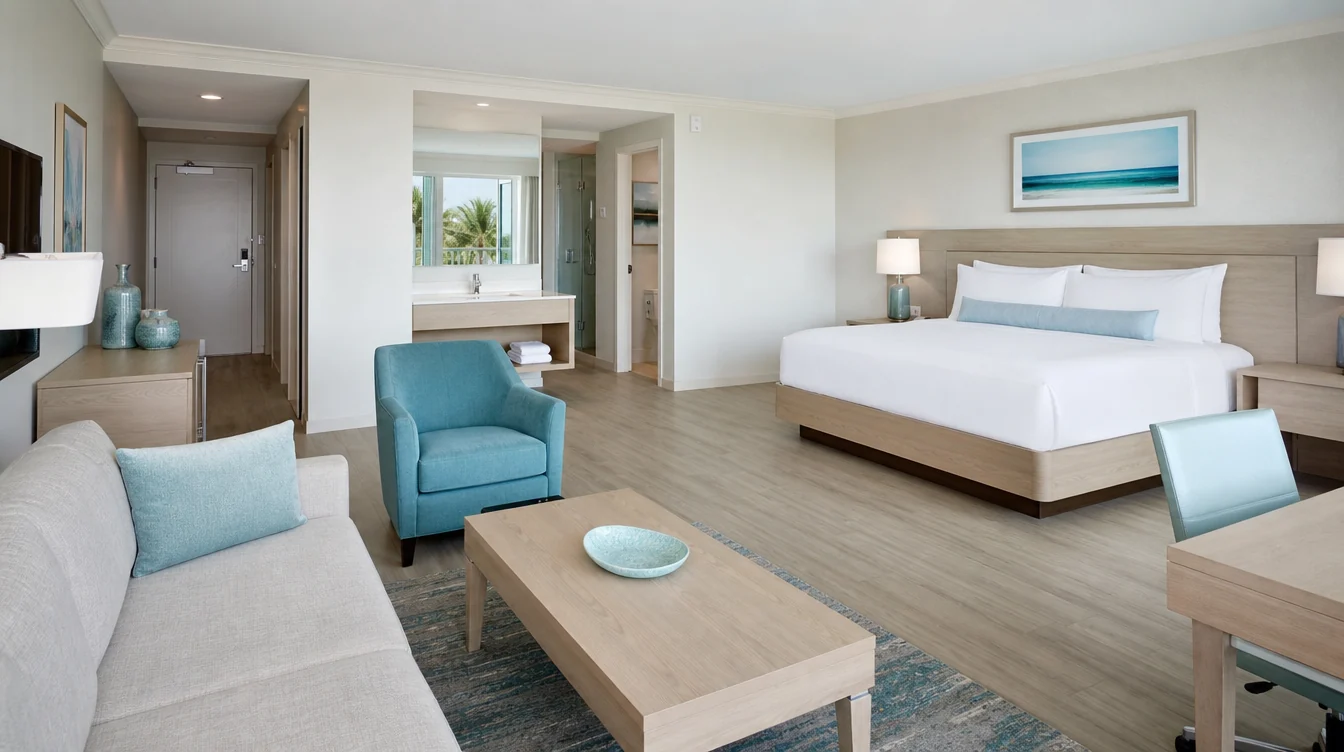
Plan deliveries around complete, usable rooms.
Set deliveries against your own booking calendar and the number of complete rooms the team can install and inspect. Plan where unpacked pieces and packaging will go; a large furniture shipment should not consume the working corridors or rooms due back in service that day.
Compare quotations using the same scope: furniture, packaging, shipping, unloading, assembly, placement and removal of old pieces. Record what is included, who handles each step and how missing or damaged items affect a room's release. Use the phased furniture replacement guide to organize the room batches.
YOUR FLORIDA PROJECT
Turn the room plan into a furniture brief.
Send your room count, location and the categories you want to discuss. A clear early brief can start with approximate quantities; confirmed dimensions and selections can be added as the project develops.
| Decision | Record for each room type |
|---|---|
| Room mix | Room name, confirmed count and any layout exceptions |
| Furniture | Item, quantity per room, dimensions and retained pieces |
| Finish & upholstery | Reference, approval status and permitted alternatives |
| Delivery & installation | Property address, access constraints, receiving and placement scope |
| Release plan | Sample-room approval, room batches and target timing |
Hotel furniture questions.
What belongs in a Florida hotel furniture inquiry?
Include the property location, room types, number of rooms, furniture categories and target installation window. For a Florida project, note any room-size variations and delivery-route constraints. Add confirmed dimensions or an existing furniture schedule when available.
Can the project cover selected pieces instead of a whole room?
Yes. Define which furniture stays and which pieces need replacement. Headboards and nightstands, desks and chairs, or storage pieces can form a focused scope. Review the new and retained furniture together before approving the package.
How should room-package quantities be calculated?
List the quantity of each item per room type, multiply by the confirmed room count for that type and record any approved spares separately. Count king, double-queen and suite packages independently. The project team should confirm the final schedule before ordering.
When should delivery and installation dates be confirmed?
Confirm the furniture specification, quantities, approval milestones and delivery scope first. Ask for a written production and shipping schedule for the actual package, and coordinate it with receiving access, installation responsibility and the rooms the hotel can release.