
A damaged desk does not automatically need replacement, and a refinishing quote does not establish that the desk is worth saving. The decision starts with the failure: surface wear, a replaceable component, damage to the underlying structure, or a recurring problem affecting a group of rooms. Each calls for different work.
Use the intervention ladder after the condition audit has identified the affected pieces. Its purpose is to choose work that restores the required function and appearance for the period the hotel intends to keep them. Age and a percentage of replacement cost cannot make that decision alone.
Separate urgent findings from the capital comparison
Take a loose load-bearing assembly, damaged electrical component or compromised anchoring out of the cosmetic discussion. Route it through the property's safety and engineering procedure, restrict use as required and have the appropriate person assess it. Do not prove a suspect chair is sound by loading it harder or let a new finish stand in for a structural repair. The worn-versus-unsafe guide covers that triage.
For the remaining work, identify the manufacturer, model, material, installation date where known and previous repairs. Photograph the affected area and the whole piece. Check whether the issue is isolated or repeated across the same furniture package. A failed drawer slide and a swollen drawer box can both present as a drawer that will not close; ordering slides before diagnosing the box can leave the original problem untouched.

Touch up a sound surface
Touch-up suits localized appearance damage when the underlying material and assembly remain sound. Ask for a finish match and the intended repair method. Review the result under the room's lighting and from normal guest viewing positions before treating the whole group. A repair that matches color but changes sheen can remain conspicuous.
Bernhardt Hospitality's care guidance describes touch-up pens or sticks for scratches from normal use. It also calls for fabric-specific cleaning instructions and testing a cleaning method in an inconspicuous area. Apply the instructions for the actual product; a treatment suitable for one finish or upholstery material need not suit another.
Distinguish a stain, residue or scuff from missing finish before commissioning surface work. Cleaning may resolve the first group. It cannot replace material that has worn away. Send approved cleaning instructions back to housekeeping if the inspection points to a repeated cleaning-related problem, so the repaired pieces return to a changed routine.
Repair the component and investigate repeat failures
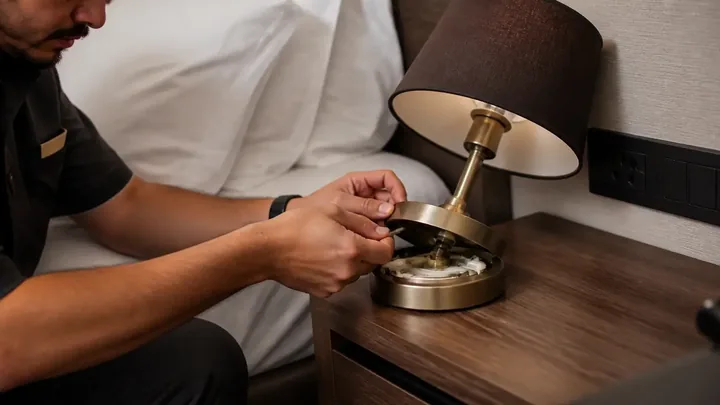
A drawer slide, pull, glide, caster or detachable cushion may be a separate repair scope. Confirm the part number, dimensions, attachment and compatibility with the existing piece. Parts that look similar can differ in travel, mounting position or load rating. Obtain the maker's instructions or a qualified repairer's specification before authorizing a substitution.
Check the surrounding assembly as well. New hardware needs sound fixing points; a replacement cushion does not restore a damaged seating frame. Ask the repairer to identify what caused the failure and what the completed repair will restore. A promise to “repair furniture” is too broad to compare against replacement.
Read prior work orders by item model and failure type, not just by room number. Repeated failures may reflect a component problem, installation, cleaning, use or damage to the underlying piece. They justify investigating the cause and comparing a coordinated component change with continued individual repairs. They do not establish that every piece in the group has failed.
Check warranty options before altering the piece
Find the original purchase and shipment records, warranty terms and photographs before commissioning modifications. Ask whether the maker has an applicable repair or replacement process. Keep the response with the work order.
Bernhardt Hospitality's warranty, for example, distinguishes material and workmanship defects from ordinary wear and excludes damage caused by user alterations or improper cleaning. Its categories and coverage periods differ. That makes the actual product and cause of failure relevant; neither “still in warranty” nor “too old” is a sufficient answer without checking the applicable terms.

Refinish the right material, on a structure worth retaining
Identify the surface before requesting a refinishing price. Solid wood, veneer, decorative laminate and solid surface require different approaches. Ask the contractor what will be removed, repaired or renewed, which edges and joints are included, and what condition the underlying material must meet. A photograph of the top does not establish the condition of its support.
For laminate casegoods, distinguish the decorative surface from the substrate beneath it. Wilsonart's laminate technical data identifies its laminate as a nonstructural material bonded to a suitable substrate. If the base is swollen, loose or damaged, ask for that repair to be specified separately. A renewed surface cannot be credited with restoring the base unless the work addresses it.
Do not treat aggressive abrasion as routine restoration. Wilsonart's laminate care instructions warn that abrasive cleaners and pads can damage the decorative surface. Establish a material-appropriate repair or resurfacing method instead of applying a wood-furniture treatment to a woodgrain laminate.
For reupholstery, price the fabric, cushion and supporting assembly separately enough to see what is retained. Review the proposed fabric's care requirements and any applicable project approvals. Re-covering is a useful option only when the retained piece can provide the required service and the work resolves its actual defects.

Compare the complete costs over the same horizon
First decide when this furniture is expected to change again. Use the property's current capital plan and confirmed project requirements. A funded replacement next year creates a different decision from an undated intention to renovate. If the timing remains open, compare the options under the plausible dates rather than quietly choosing one.
| Cost or consequence | Repair or refinish | Replace |
|---|---|---|
| Work itself | Assessment, parts, materials, labor and any return visit | Furniture, freight, receiving, assembly and installation |
| Room interruption | Removal, treatment, curing or drying as specified, reinstatement and inspection | Removal, delivery, fitting, cleaning and inspection |
| Other affected work | Protection and repairs needed around the piece | Mounting, fixing-hole repairs, adjoining finishes and disposal where required |
| Work before the next planned change | Further repair or replacement supported by the condition assessment | Expected maintenance and compatibility with that change |
| Result to compare | Restored function and appearance, with the retained structure identified | New specification, fit and finish compatibility with what stays |
Add the quoted work, handling and reinstatement costs, plus any supported expectation of repeat work within the chosen period. Compare that total with the complete installed replacement cost for the same period. Keep unpriced work visible. A low repair-to-purchase-price ratio can reverse when one option omits handling or requires a second room closure.
Include a room-revenue effect only when operations can estimate displaced demand. A blocked room does not necessarily equal a lost sale, and multiplying every unavailable night by the advertised rate overstates the impact when other suitable rooms remain available. Record the likely displacement separately from the contractor's price, so a change in occupancy assumptions does not rewrite the work quote.
There is no universal percentage at which repair stops making sense. If both options meet the required standard through the same period, compare their complete costs and operational effects. If the repair is only a bridge to a confirmed renovation, judge it as a bridge. If a replacement is intended to survive that renovation, confirm its design compatibility before counting that longer service.
Prove the scope before repeating it across the hotel
Have the selected repair method completed on a representative piece before authorizing a repeated program. Where the defects or materials differ, one successful repair cannot establish that every piece is suitable. Record the actual work, elapsed room interruption, finish match and inspection result, then resolve any changes with the contractor before proceeding.
Schedule treatment, reinstatement and room release as separate steps. Follow the product and contractor instructions for ventilation, curing or drying, and inspect the finished work through the property's normal engineering and room-release process. A contractor leaving the room does not establish that the room is ready for guests.
Keep the approved scope, affected room and item IDs, costs, photographs and completion checks together. Recheck repaired pieces during subsequent room walks; repeated findings are evidence for the next decision. If replacement is selected, carry the quantities and retained items into the phased replacement plan. That resource handles purchasing and room batches; this guide establishes why each piece belongs in the repair or replacement scope.